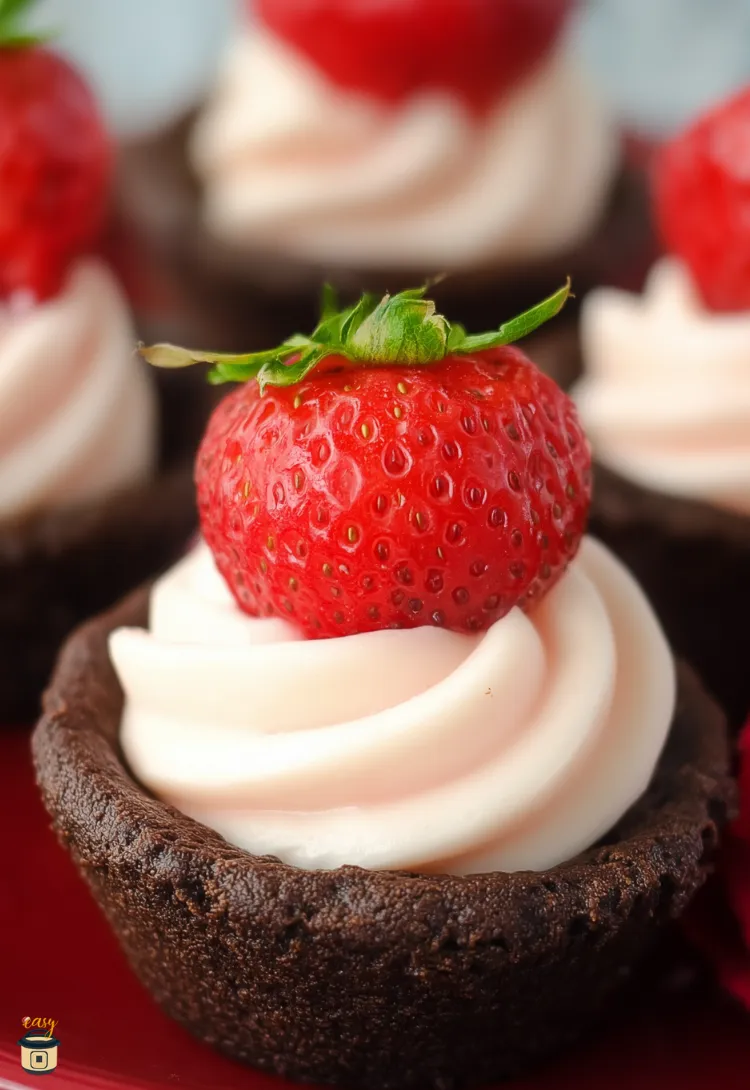
Chocolate covered strawberries are one of those desserts that feel special without asking for much effort. They show up on Valentine’s Day tables, at bridal showers, on dessert boards, and even as last-minute homemade gifts that look far more impressive than they actually are. The beauty of this recipe is its simplicity: fresh strawberries, good chocolate, and a few small details that make all the difference between “nice” and truly perfect. When done right, the chocolate sets with a smooth, glossy finish, the strawberry stays juicy inside, and every bite feels balanced instead of overly sweet.
The most important step often gets overlooked before the chocolate even melts: drying the strawberries completely. Any trace of water on the surface can cause the chocolate to seize or turn dull and grainy. After washing, strawberries should be patted dry carefully and then left on a towel for several minutes to air-dry. This small pause is one of the biggest secrets to getting that clean, professional-looking coating. Another key detail is temperature. Strawberries should be at room temperature, not cold from the fridge. Cold fruit causes condensation, which again interferes with smooth dipping and proper setting.
When it comes to chocolate, quality matters more than quantity. Chocolate chips can work in a pinch, but baking chocolate or couverture-style chocolate melts more smoothly and gives a richer flavor. Dark, milk, or white chocolate all work depending on taste, but each benefits from gentle melting. Chocolate should be melted slowly, either over a double boiler or in short intervals in the microwave, stirring often. Rushing this step or overheating the chocolate leads to a thick, uneven coating that won’t set properly.

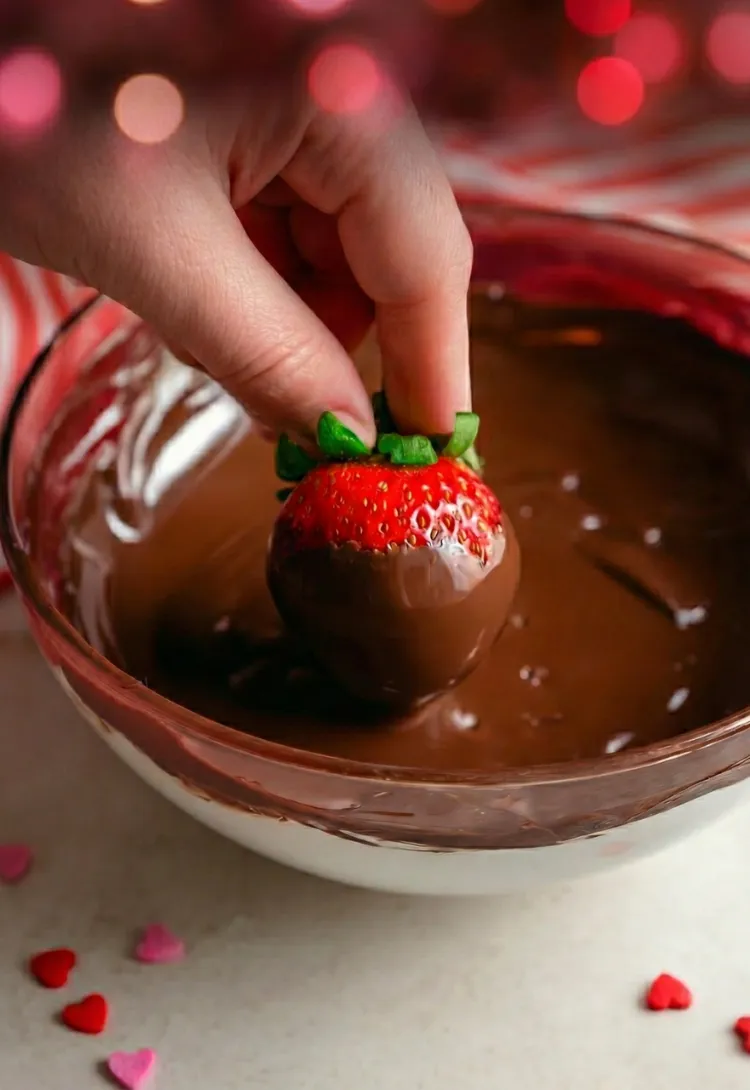
One simple trick that makes a noticeable difference is adding a small amount of neutral oil or coconut oil to the melted chocolate. Just a teaspoon per cup of chocolate helps thin it slightly and creates a smoother finish when dipping. This also gives the strawberries that subtle shine people associate with bakery-style treats. Once the chocolate is ready, each strawberry should be held by the stem or leaves and dipped in one smooth motion, then gently lifted and twisted to let excess chocolate drip back into the bowl. Scraping the bottom lightly against the edge of the bowl prevents thick pools from forming at the base.
After dipping, strawberries should be placed on parchment paper, not wax paper, which can stick. At this stage, decorations can be added if desired: a drizzle of contrasting chocolate, a sprinkle of crushed nuts, or a light dusting of sugar crystals. However, keeping them simple often works best, especially for Valentine’s Day, where the combination of red strawberries and rich chocolate already does the work visually.
Letting the chocolate set properly is another place where patience pays off. Strawberries should set at room temperature in a cool, dry space. Refrigeration can speed things up, but it can also cause condensation and dull the finish. If the room is warm, a brief chill is fine, but they should be returned to room temperature before serving for the best texture and flavor.
Chocolate covered strawberries are best enjoyed the same day they are made, when the contrast between the crisp chocolate shell and the fresh fruit inside is at its peak. If they need to be stored, they should be kept uncovered or loosely covered in the refrigerator and brought back to room temperature before serving. Whether made for Valentine’s Day, a party platter, or a quiet evening at home, this recipe proves that a few simple ingredients, handled with care, can create something that feels thoughtful, elegant, and homemade in the best way possible.


Chocolate Covered Strawberries – Easy Valentine’s Dessert
Easy chocolate covered strawberries made with fresh strawberries and melted chocolate. A simple no-bake dessert perfect for Valentine’s Day.
12
strawberries15
minutes5
minutes95
kcal20
minutesIngredients
12 large 12 Fresh Strawberries, Washed And Completely Dry
6 oz 6 Semi-sweet Chocolate, Chopped Or Chips
1 teaspoon 1 Coconut Oil (optional, For Smoother Chocolate)
Directions
- Line a baking sheet with parchment paper.
- Wash strawberries and dry completely. Let them air-dry if needed.
- Melt chocolate gently using a double boiler or microwave in short bursts.
- Stir in coconut oil if using.
- Dip each strawberry into melted chocolate, twist gently, and let excess drip off.
- Place on parchment paper and allow to set at room temperature.
- Chill briefly only if needed.
Notes (Optional but Recommended)
- Strawberries must be fully dry to prevent chocolate from seizing.
- Best enjoyed the same day.
Frequently Asked Questions – Chocolate Covered Strawberries
How long do chocolate covered strawberries last?
Chocolate covered strawberries are best enjoyed the same day they’re made. When stored properly in the refrigerator, they can last up to 24 hours, but the chocolate may lose its shine and the strawberries can release moisture over time.
Should chocolate covered strawberries be refrigerated?
Yes, but only if needed. If your kitchen is cool, they can sit at room temperature for a few hours. For longer storage, place them in a single layer in the refrigerator, uncovered or lightly covered with parchment to avoid condensation.
Why did my chocolate turn grainy or thick?
Chocolate can seize if it comes into contact with water or if it’s overheated. Make sure strawberries are completely dry before dipping, and melt chocolate slowly using gentle heat. Adding a small amount of coconut oil can help keep the chocolate smooth.
What is the best chocolate for chocolate covered strawberries?
Semi-sweet or dark chocolate works best because it melts smoothly and balances the sweetness of the strawberries. Chocolate chips or high-quality chocolate bars both work well. Avoid candy melts if you want a classic flavor.
Can I make chocolate covered strawberries ahead of time?
They are not ideal for making far in advance. For best texture and appearance, make them the same day you plan to serve them, preferably within a few hours.
How do I keep chocolate covered strawberries from sweating?
Allow strawberries to come to room temperature before serving if they’ve been refrigerated. Avoid sealing them in airtight containers while warm, as trapped moisture causes condensation.
Can I use milk chocolate or white chocolate?
Yes. Milk chocolate creates a sweeter result, while white chocolate adds contrast and works well for drizzling. You can also combine chocolates for decorative finishes.
Are chocolate covered strawberries good for Valentine’s Day?
Absolutely. Chocolate covered strawberries are one of the most popular Valentine’s Day desserts, loved for their simple ingredients, romantic look, and quick preparation time.
Can I freeze chocolate covered strawberries?
Freezing is not recommended. Frozen strawberries release too much moisture when thawed, which affects both texture and appearance.
Why won’t the chocolate stick to my strawberries?
This usually happens when strawberries are wet or cold. Always dry them thoroughly and let them reach room temperature before dipping.