Most baked bean recipes fall into one of two categories: the ones that taste like they came straight from the can, and the ones that require soaking dried beans for twelve hours before you even get started. This one is neither. You begin with canned pork and beans, spend about ten minutes building a sauce, lay bacon across the top, and let the oven do the rest. An hour and a half later you have something that tastes like it took all day.
It’s a good recipe to have around. It travels well to potlucks, it holds in a warm oven for hours without suffering, and it goes with just about everything you’d cook on a grill. People always want to know what’s in it. The answer is embarrassingly simple.
The beans
Two 28-ounce cans of pork and beans — the standard Bush’s-style cans with a little pork fat already in there. Drain off most of the liquid before you mix them into the sauce, but not all of it. Fully drained beans bake up dry and stodgy. A little of the liquid left behind helps the whole thing stay saucy through the long bake time.
Don’t rinse them. They pick up flavor from the liquid they’re packed in, and rinsing strips that away. Just drain, fold gently into the sauce, and leave them mostly whole. Some will break down in the oven and that’s fine — it helps thicken the sauce naturally.
The sauce
Half a cup of ketchup and half a cup of BBQ sauce mixed together is the base. Ketchup alone is too one-note. BBQ sauce alone takes over. Together they give you the sweet-tangy backbone that makes these taste Southern rather than generic.
A quarter cup of brown sugar adds depth — don’t substitute it out or try to reduce it significantly. These aren’t meant to be low sugar. A tablespoon of yellow mustard cuts through the sweetness with a little sharpness. Worcestershire sauce adds something that’s hard to name but easy to notice when it’s missing. Garlic powder, black pepper, and a few drops of liquid smoke round it out.
The liquid smoke is optional in the recipe card but worth using if you have it. Three or four drops, not more. It’s potent — too much and the beans taste acrid rather than smoky. Add it to the sauce bowl before you combine anything else so it gets fully distributed.
The bacon
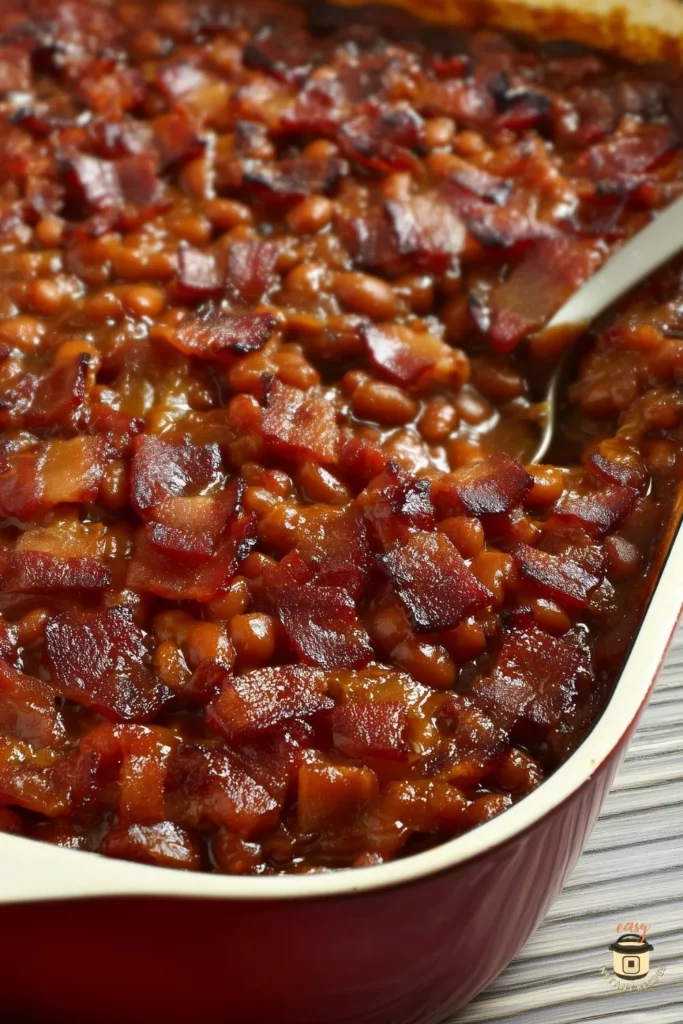
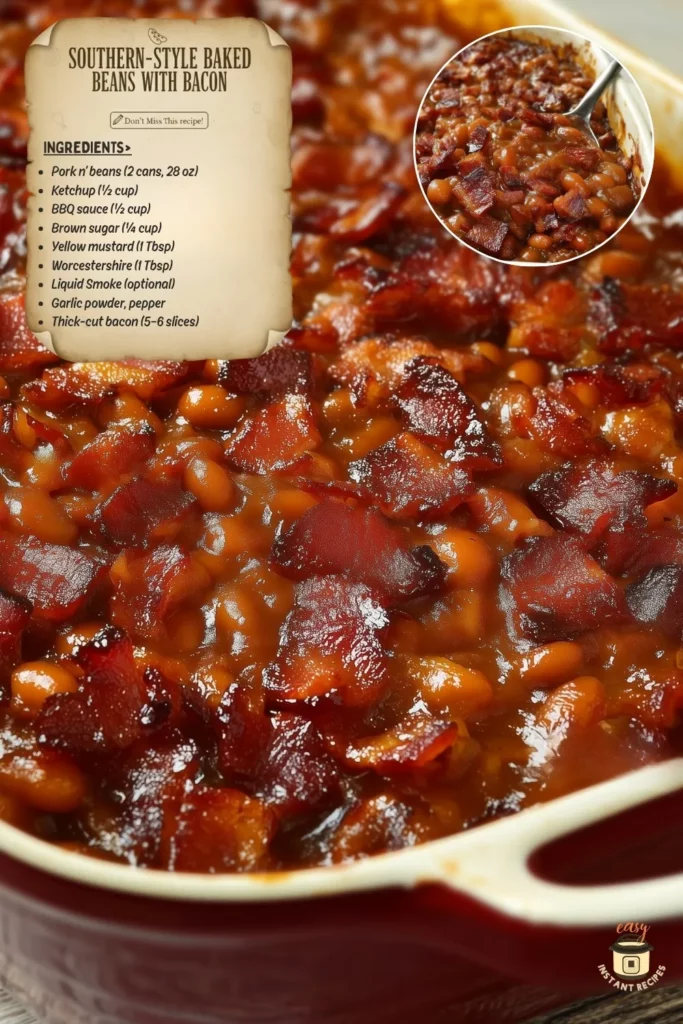
Thick-cut bacon, five or six slices, cut into pieces and laid across the top of the beans before the dish goes into the oven. As it bakes, the fat renders down into the beans beneath it and the edges get crispy. By the time it comes out of the oven, the bacon on top is browned and starting to crisp while the underneath sides have been cooking in the sauce the whole time.
Thick-cut holds up better than regular bacon through the long bake — regular bacon can disappear or get too done before the beans are fully caramelized. If thick-cut isn’t available, regular works but check the dish around the 45-minute mark so the bacon doesn’t burn.
Cut each slice into thirds or fourths rather than leaving them whole. Easier to serve, and every scoop gets some bacon rather than it all being concentrated in one spot.
The bake
350°F for an hour to an hour and a half. Low and slow is the point. The sauce caramelizes at the edges, the beans absorb everything they’re sitting in, and the bacon finishes on top. You’re looking for bubbling sauce around the edges, a glossy thick surface, and bacon that’s browned and crisp.
If the bacon looks done before the hour mark and the sauce is still very liquid, tent the dish loosely with foil and keep baking. If the beans look thick enough but the bacon needs more time, take the foil off and give it another 10-15 minutes uncovered.
Don’t pull it too early. Under-baked baked beans are thin and taste like the canned product you started with. The sauce needs time to reduce and concentrate. Pull it early and it still tastes like doctored canned beans. Give it the full hour and a half and it doesn’t.
Making it your own
The sauce is adjustable in almost every direction without breaking anything. More brown sugar for sweeter. A spicier BBQ sauce for heat. More liquid smoke for something that tastes like it spent time near an actual fire. Diced onion and green pepper cooked in the pan before mixing into the beans adds texture and flavor depth — that’s the direction to go if you want more texture and a less flat flavor without switching to dried beans.
Diced jalapeño stirred into the sauce before baking adds slow heat that builds as you eat. Crumbled cooked sausage mixed into the beans before they go in the dish turns this into something closer to a main course than a side.
For a crowd
This recipe fits a 2-quart baking dish comfortably. For a larger group, double everything and use a 9×13 pan. The bake time stays roughly the same — check at the hour mark and go from there. You can also make this a day ahead, refrigerate it unbaked, and put it in the oven the day of. The sauce gets a little thicker overnight as the beans absorb some of it, both are fine.
Storing leftovers
Keeps in the fridge for up to five days. The beans continue to absorb the sauce as they sit, so leftovers are even thicker than the original — reheat with a splash of water or a spoonful of extra BBQ sauce stirred in to loosen them up. Microwave works fine. So does a 325°F oven covered with foil for about 20 minutes.
They freeze well for up to three months. Thaw in the fridge overnight and reheat as above. The texture softens slightly after freezing but the flavor is still good.
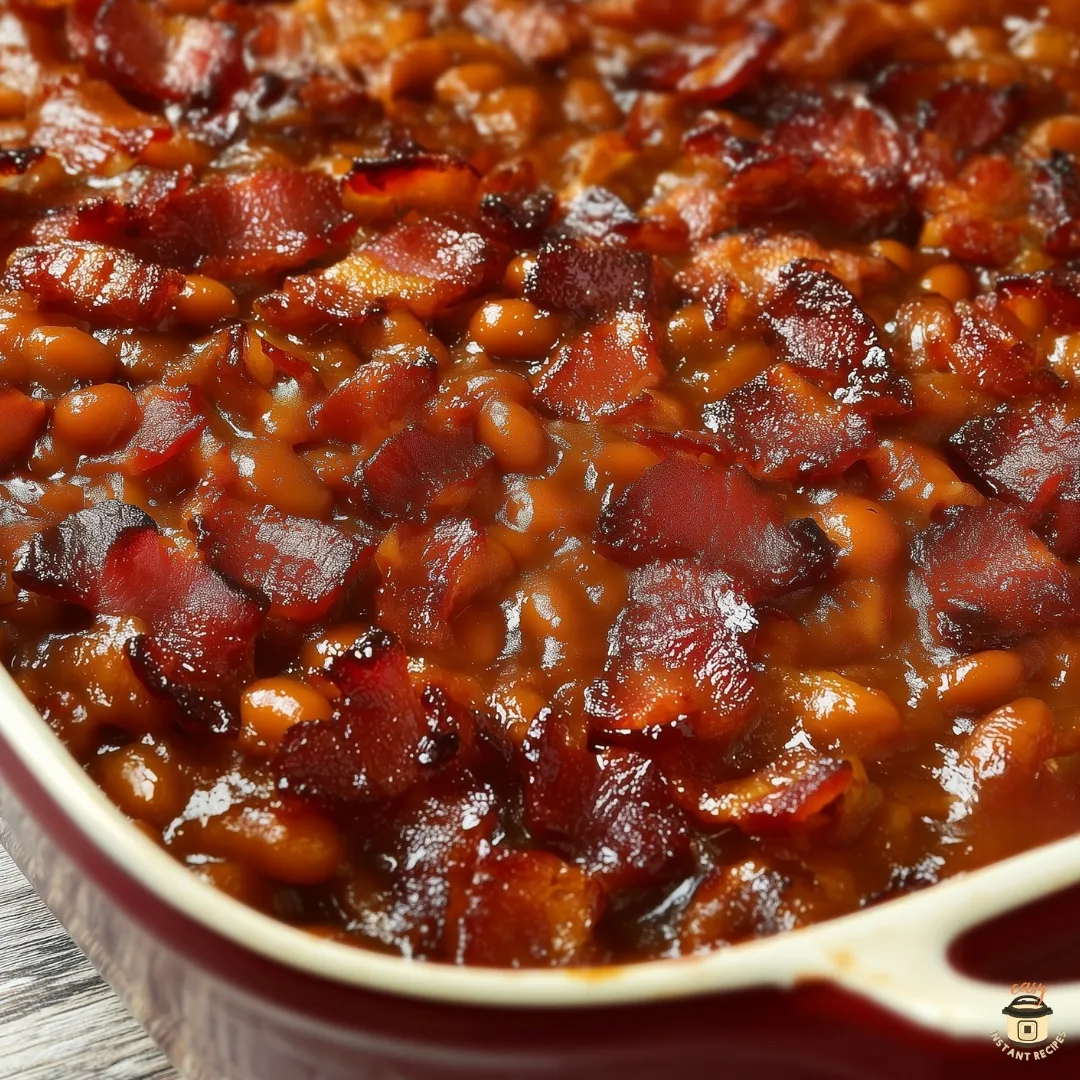
Southern Baked Beans with Bacon
Sweet, smoky, caramelized Southern baked beans made with canned pork and beans, a tangy BBQ sauce base, and thick-cut bacon laid across the top. Ready in about 90 minutes with minimal prep.
8
servings10
minutes1
hour30
minutes290
kcal1
hour40
minutesIngredients
2 cans 2 (28 oz each) pork and beans, most liquid drained
½ cup ½ Ketchup
½ cup ½ BBQ sauce
¼ cup ¼ Brown sugar, packed
1 tablespoon 1 Yellow mustard
1 tablespoon 1 Worcestershire Sauce
1 teaspoon 1 Garlic Powder
½ teaspoon ½ Black Pepper
5–6 5–6 drops liquid smoke (optional but recommended)
5–6 5–6 slices thick-cut bacon, cut into pieces
Directions
- Preheat oven to 350°F. Grease a 2-quart baking dish or 9×9-inch pan.
- In a large bowl, whisk together the ketchup, BBQ sauce, brown sugar, mustard, Worcestershire sauce, garlic powder, black pepper, and liquid smoke if using.
- Drain most of the liquid from the canned beans, leaving a small amount. Add the beans to the sauce mixture and fold gently to combine — keep the beans mostly whole.
- Pour the bean mixture into the prepared baking dish and spread evenly.
- Lay the bacon pieces in a single layer across the top of the beans, covering most of the surface.
- Bake uncovered for 60–90 minutes, until the sauce is thick and bubbling at the edges and the bacon is browned and crisp.
- Let rest for 5–10 minutes before serving.
Notes
- Don’t fully drain the beans — leave a small amount of the canning liquid to help the sauce stay saucy through the bake.
- Thick-cut bacon holds up better than regular bacon during the long bake time. If using regular bacon, check at the 45-minute mark.
- If the bacon browns before the sauce has thickened, tent loosely with foil and continue baking.
- Can be assembled a day ahead and refrigerated unbaked. Add 10–15 minutes to the bake time if going in cold from the fridge.
- Leftovers keep in the fridge for up to 5 days. Reheat with a splash of water or extra BBQ sauce stirred in.
- Freezes well for up to 3 months.
Common Questions About Making Southern Baked Beans with Bacon
Can I use dried beans instead of canned? Yes, but it adds significant time. Cook them first until tender — don’t try to bake dried beans from scratch, they won’t soften properly in the sauce. Once cooked, substitute the same weight and proceed with the recipe.
Can I make this in a slow cooker? Yes. Mix everything together, pour into the slow cooker, lay bacon on top, and cook on low for 6-8 hours or high for 3-4. The bacon won’t crisp the same way it does in the oven — for better bacon texture, cook the slices separately and add them on top before serving.
What BBQ sauce works best? Whatever you already like on its own. A Kansas City-style sweet sauce (like KC Masterpiece) is the most common and gives you that classic result. A smokier sauce like Stubb’s takes the beans in a different direction. Avoid anything very thin and vinegary — it doesn’t reduce the same way.
Can I make this vegetarian? Swap the pork and beans for plain canned navy or great northern beans and leave out the bacon. Add a tablespoon of smoked paprika and increase the liquid smoke slightly to compensate for the missing pork fat. It’s a different dish but still good.
My beans came out too sweet. How do I fix it next time? Reduce the brown sugar to two tablespoons and use a BBQ sauce that’s more smoky than sweet. A small splash of apple cider vinegar stirred into the sauce before baking adds some tartness that balances the sweetness without changing much else.