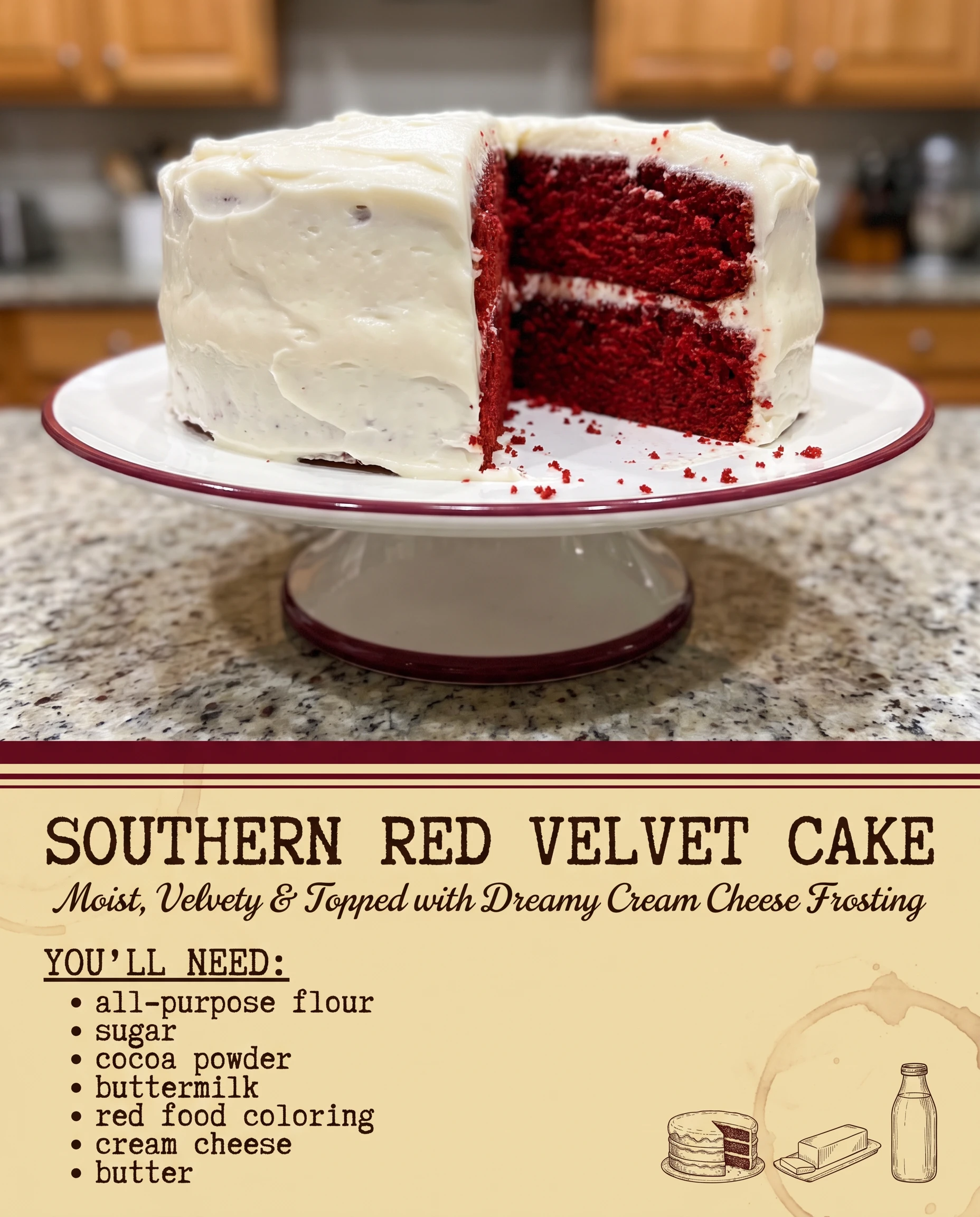
There’s something about the aroma of a red velvet cake baking in the oven that instantly wraps the kitchen in a cozy hug. It’s not just any cake—it’s the kind of treat that feels like home, like a shared secret passed down through countless family dinners and potluck gatherings. The smell alone pulls people in, stirring up that familiar anticipation of soft, tender cake layered with luscious cream cheese frosting. It’s a comfort-food classic that never truly fades away, even as trends come and go.
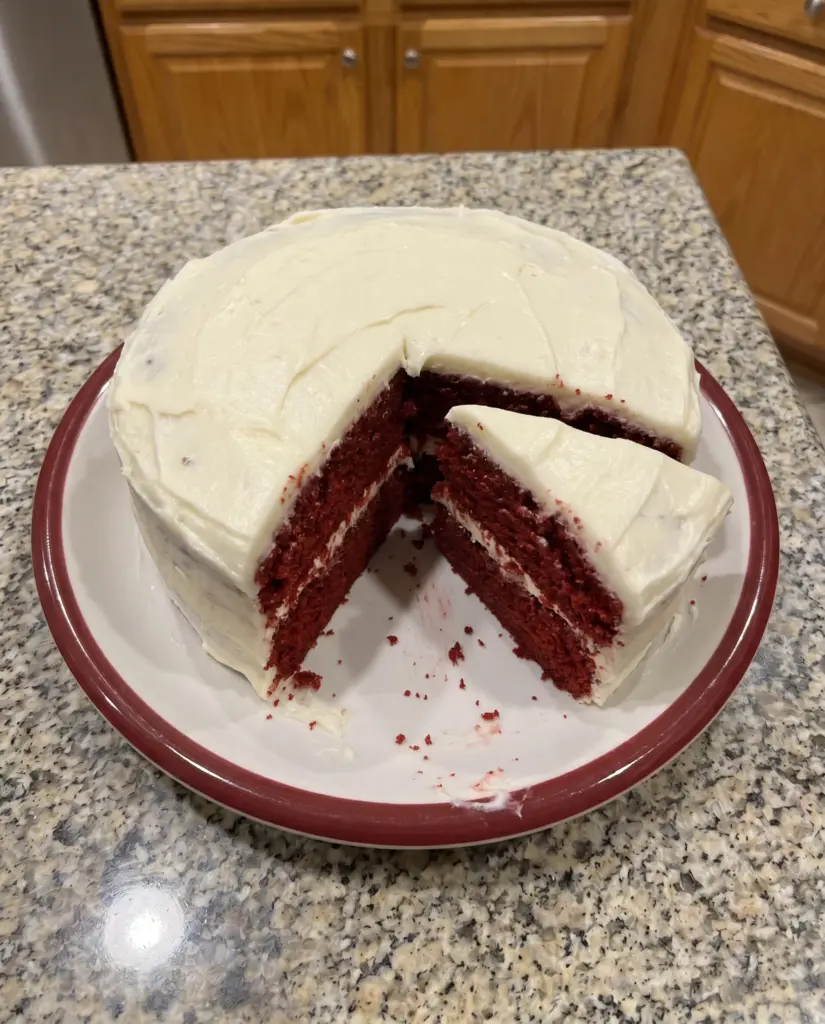
I think that’s why red velvet cake holds such a special place in so many hearts. It’s rich but gentle, with a velvety crumb that melts on your tongue and a tangy frosting that balances sweetness perfectly. Baking this cake always fills the kitchen with warmth and a sense of tradition, even if it’s just a quiet Tuesday night. It’s the kind of recipe that sparks a little joy, no matter the occasion.
Why This Recipe Still Works
You’ll find countless versions of red velvet cake floating around—some fancy, some simple. But this one, with its straightforward ingredients and familiar steps, feels like a reliable friend. Two and a half cups of flour, a generous cup of buttermilk, two whole eggs, and a splash of red food coloring come together to create that signature color and texture we all crave.
What makes this cake stick around year after year isn’t just the vibrant red hue or the cream cheese frosting, though those are crowd-pleasers. It’s the balance. The way the oil keeps the crumb moist, the buttermilk adds a subtle tang, and the sugar sweetens just enough without overpowering. It’s not fussy or complicated—just pure, honest comfort.
One small trick that changes everything here is the timing of mixing the wet and dry ingredients. Gently folding the wet into the dry until just combined keeps the crumb tender and prevents it from turning tough. The mistake most people make is overmixing, which can lead to a denser cake. So take it slow, enjoy the process—it’s part of the comfort.
The Secret to the Texture
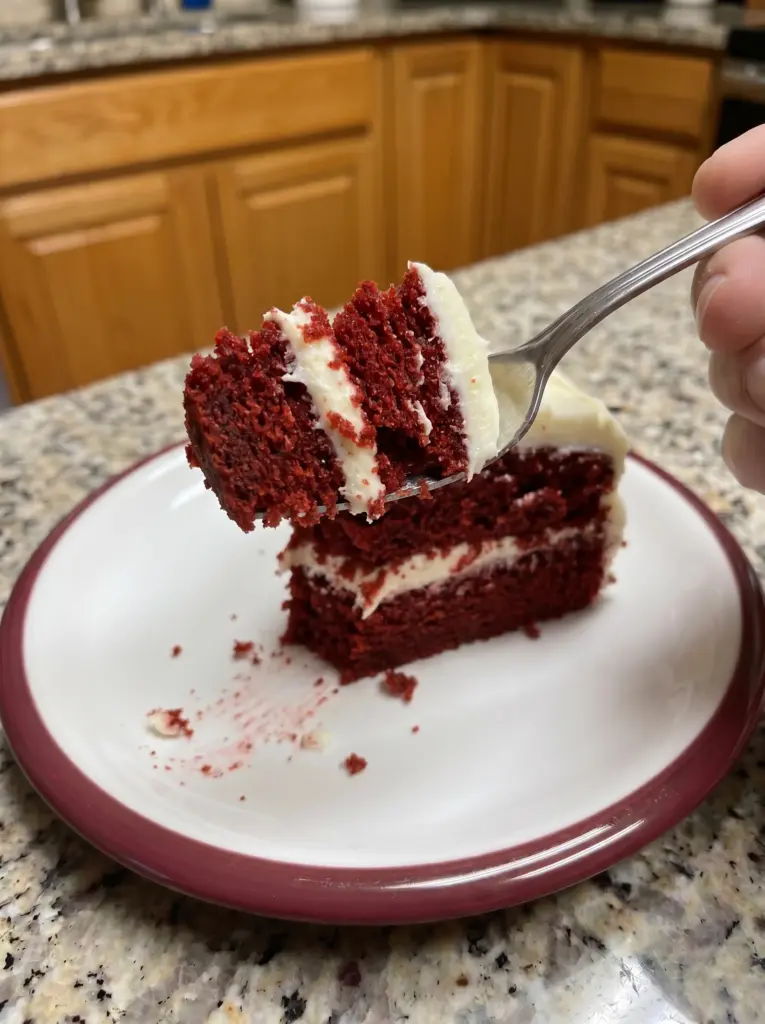
The texture is what makes or breaks a red velvet cake. It should be soft, light, and almost silky when you bite into it. That’s why the combination of vegetable oil and buttermilk is so crucial. Oil keeps the cake moist longer than butter would, and buttermilk adds a delicate acidity that tenderizes the flour’s gluten.
When you pour the batter into your prepared pans, think of it like setting the stage for that perfect crumb. The pans should be greased and floured—this small detail ensures the cake releases cleanly, leaving you with smooth, even edges. Nobody wants to wrestle with a cake that sticks and tears!
Baking at 350°F (175°C) for just 25 to 30 minutes is about patience, not rushing. Peek in during the last few minutes and test with a toothpick. When it comes out clean, the cake is ready—but if you open the oven too early or too often, the heat escapes, and the cake might not rise as beautifully.
The Smell Is Half the Reason
There’s a reason the kitchen always feels warmer when this cake is baking. That rich, sweet scent of sugar mingling with the slight tang from buttermilk and the hint of vanilla in the eggs fills the air like a comforting promise. It’s the kind of smell that makes everyone stop what they’re doing and ask, “What’s that delicious smell?”
And don’t even get me started on the visual impact of the red food coloring swirling into the batter. It’s like magic—transforming a simple mix of pantry staples into something festive and special. The color alone lifts spirits, and when it emerges from the oven, perfectly risen and glowing, it’s hard not to feel a little proud.
Cream Cheese Frosting: The Icing on the Cake
No red velvet cake feels complete without that velvety cream cheese frosting. It’s rich, tangy, and sweet all at once, perfectly complementing the cake’s tender crumb.
Letting the cake cool completely before frosting is one of those tiny details that changes everything. Frost a warm cake, and the frosting melts into a gooey mess. But when the layers are cool, the frosting spreads smoothly and stays put, giving you those classic layers that hold their shape.
Some folks like to add a touch of lemon zest or a splash of vanilla to their cream cheese frosting for a little extra zing. It’s those small personal touches that make this cake feel like yours.
Why This Recipe Never Disappeared
Red velvet cake has a timeless charm that’s hard to pin down. It’s not overly sweet or fussy. It’s the kind of cake that feels both familiar and special, like a sweet treat that belongs at any family table or celebration.
It’s also forgiving. You don’t need fancy ingredients or complicated techniques to nail it. Even if you’re new to baking, this recipe welcomes you in with open arms. And once you make it, you’ll find it hard to stop at just one slice. Somebody always sneaks a bite before dinner, and the leftovers somehow taste even better the next day.
Storing and Reheating
If you’re lucky enough to have leftovers—and honestly, who isn’t?—store the cake in an airtight container in the fridge. The cream cheese frosting keeps it moist, and the flavors deepen overnight. When you’re ready for another slice, bring it to room temperature for about 20 minutes. That little pause lets the frosting soften and the cake regain its tender texture.
Freezing is also an option if you want to make this cake ahead of time. Wrap the cooled, unfrosted layers tightly in plastic wrap, then foil, and pop them in the freezer. When you’re ready to frost, thaw overnight in the fridge, then bring to room temp before spreading on your cream cheese frosting. It’s a great way to keep the magic on hand for unexpected guests or special moments.
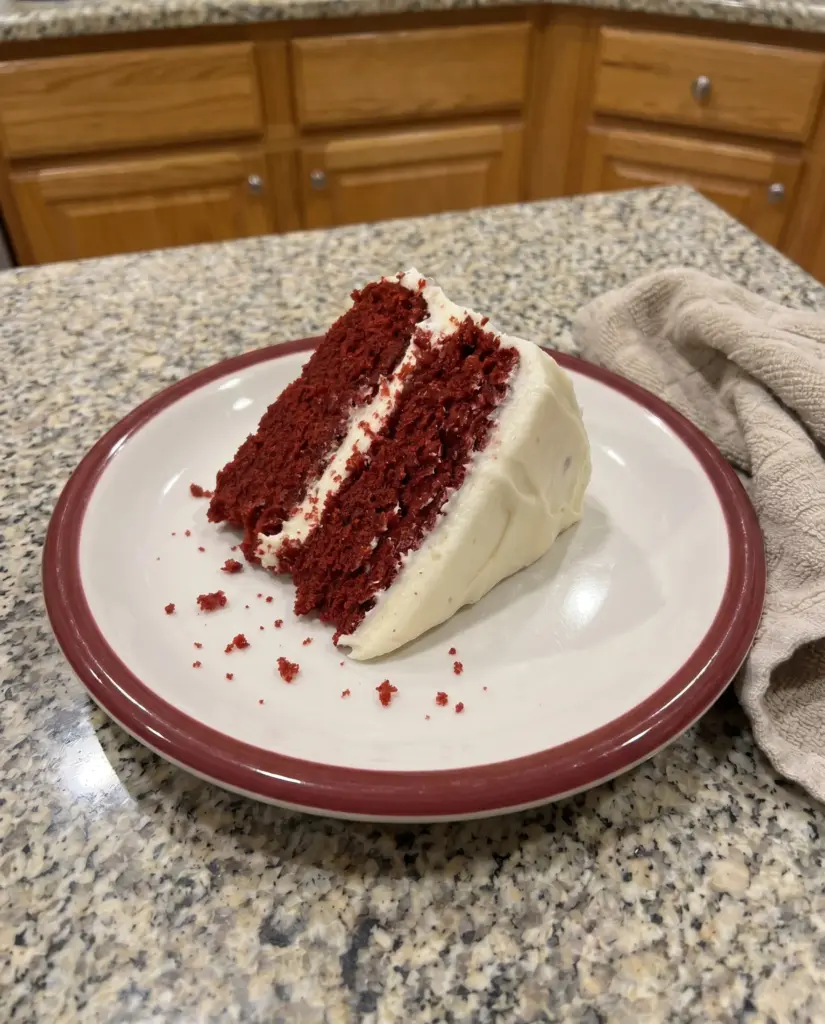
This Southern red velvet cake isn’t just a recipe—it’s a little celebration in every bite. The kind of cake that makes your kitchen feel warmer, your table feel fuller, and your heart just a bit lighter. Baking it is a simple act, but the comfort it brings is rich and lasting.
Next time you slice into that tender, red-hued crumb, with cream cheese frosting melting on your tongue, take a moment to breathe it all in. The memories, the smells, the joy of sharing something truly comforting. Because recipes like this don’t just feed the belly—they nourish the soul.
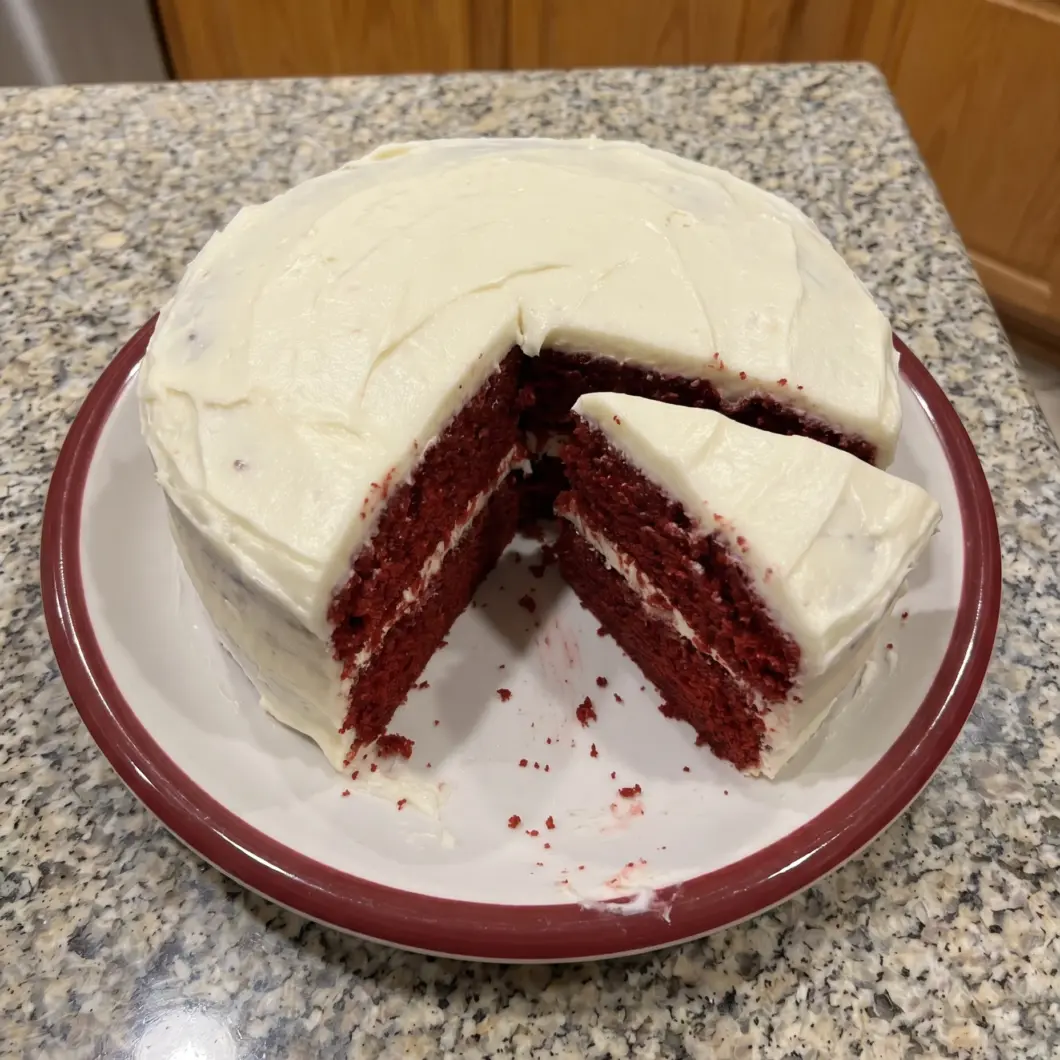
Southern Red Velvet Cake
Southern Red Velvet Cake is one of those showstopper recipes that never loses its magic. Deep red layers, a tender velvety crumb, and that tangy cream cheese frosting — it’s the cake people remember.
12
servings25
minutes30
minutes55
minutes450
kcalIngredients
2 1/2 cups 2 1/2 All-purpose Flour
2 cups 2 Sugar
1 cup 1 Buttermilk
2 2 Eggs
1 cup 1 Vegetable Oil
2 tbsp 2 red food coloring
1 batch 1 cream cheese frosting
Directions
- Preheat oven to 350°F (175°C). Grease and flour two 9-inch round cake pans.
- In a large bowl, whisk together the flour and sugar.
- In a separate bowl, whisk together the buttermilk, eggs, vegetable oil, and red food coloring.
- Gradually add the wet ingredients to the dry ingredients, mixing until just combined — do not overmix.
- Divide the batter evenly between the two prepared pans.
- Bake for 25-30 minutes, or until a toothpick inserted in the center comes out clean.
- Let the layers cool completely in the pans, then turn out and frost generously with cream cheese frosting.
Notes
- Room temperature ingredients are key — cold butter and eggs will affect the texture. The cake layers can be baked a day ahead and wrapped tightly. Frost just before serving for best results.