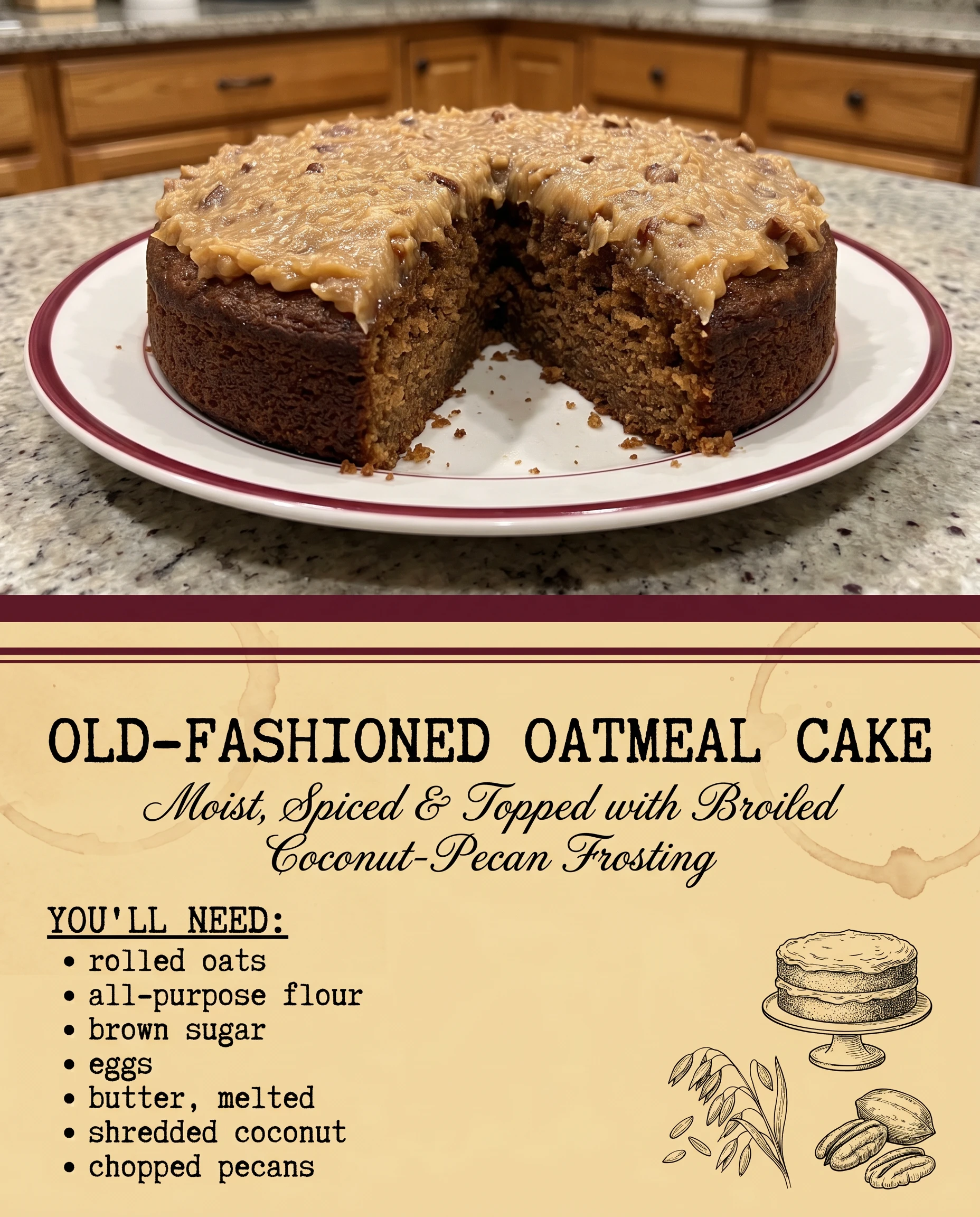
There’s something about the scent of oats mingling with melting butter and caramelizing sugars that instantly transports you to a cozy kitchen where time slows down. The kind of kitchen where the windows fog up a bit, the radio hums softly, and everyone’s just waiting for a slice of something sweet and homey to come out of the oven. That’s exactly the feeling I get when I make this old-fashioned oatmeal cake. It’s the kind of treat that doesn’t just satisfy your sweet tooth—it wraps you up in a blanket of comfort, the kind that feels timeless.
Jump to Recipe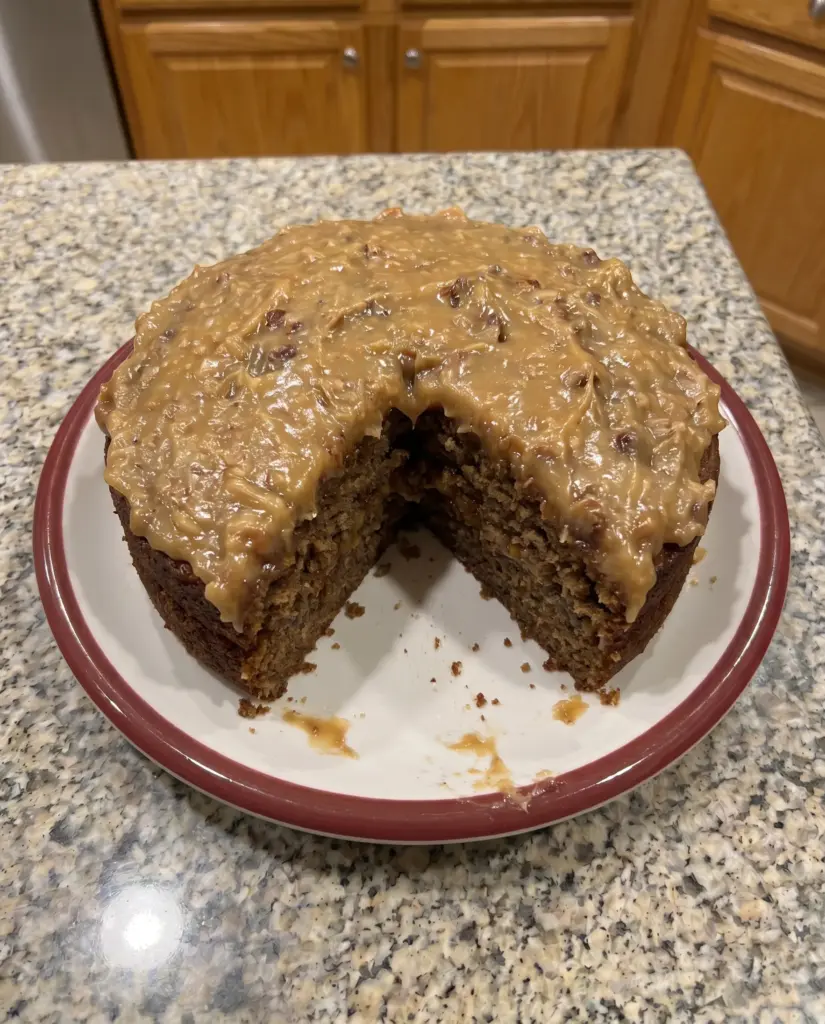
Why This Cake Has Stuck Around
This oatmeal cake isn’t flashy or overly complicated. It’s humble, honest, and full of familiar flavors. People have loved it for generations because it hits all the right notes: soft, tender cake with a bit of chew from the oats, a sweetness that’s not too sharp thanks to the brown sugar, and that irresistible coconut pecan topping that bubbles up golden and crisp. It’s the kind of dessert you remember from potlucks, church gatherings, or simple family dinners.
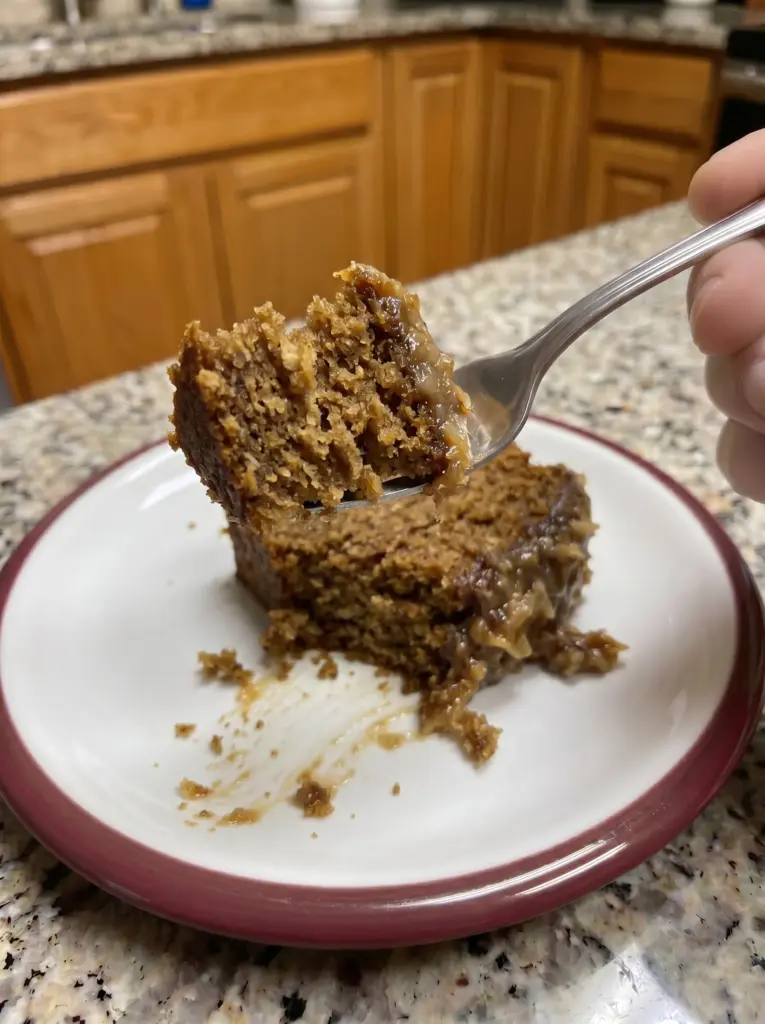
What makes it stick around isn’t just the taste, though—it’s the whole experience. The slow soak of oats in boiling water softens them just enough to melt into the batter, giving the cake a moist texture that’s a little heartier than your average slice. And that coconut pecan topping? It’s a sticky, nutty, sweet finish that cracks ever so slightly when you cut into it, revealing the soft cake underneath.
The Smell Is Half The Reason
If you’ve ever walked into a kitchen where this cake is baking, you know what I mean. The aroma is a warm hug. As the oats and sugars heat up, the air fills with a caramel-like scent, mingling with the buttery richness. That smell is like a beacon, pulling everyone out of their rooms and toward the table. It’s part of the magic—a sensory invitation to slow down and savor something simple and satisfying.
The Secret To The Texture
One small trick that makes all the difference here is letting the oats soak in boiling water before mixing them into the batter. It might seem like an extra step, but this soak softens the oats perfectly—no raw chewiness, no dryness. The oats almost dissolve into the batter, giving the cake a tender crumb with just a little texture to keep it interesting.
The mistake most people make with oatmeal cakes is skipping this soaking, ending up with gritty oats or a dry crumb. Trust me, patience here pays off. Twenty minutes of soaking is just right to bring out the oats’ gentle nuttiness without overpowering the cake.
The Magic of Creaming Butter and Sugars
Another little detail that changes everything is how you mix the butter and sugars. Creaming them until fluffy isn’t just about combining ingredients; it’s about building air into the batter so the cake rises nicely and feels light. When you add the eggs after this step, they blend smoothly, making the batter silky and rich.
Using both white and brown sugar adds depth. The white sugar sweetens, while the brown sugar brings that molasses warmth and moisture. The result? A cake that’s sweet but layered, not one-dimensional.
Coconut Pecan Topping: The Crowning Glory
That topping is like the cherry on top—except better because it’s toasted, nutty, and gooey all at once. Spread it over the warm cake right after it comes out of the oven, then pop it under the broiler for a couple of minutes until it bubbles and turns golden.
The edges get crispy, the coconut flakes toast to a light brown, and the pecans add a satisfying crunch. It’s one of those toppings where you find yourself sneaking little bites while the cake cools. If you want to switch it up, feel free to add a handful of chopped walnuts or swap pecans for almonds. Just keep the coconut—it’s what ties it all together.
Baking Tips to Get It Just Right
Preheating your oven to 350°F and greasing a 9×13 inch pan may sound basic, but it’s worth mentioning that this cake bakes evenly in this size pan, giving you that perfect soft middle and slightly crisp edges. Those edges? Absolute gold. Sometimes I’ll cut off the corners just to nibble on while the rest of the cake cools.
When you test for doneness, a toothpick should come out clean or with just a few moist crumbs. Don’t overbake—this cake shines with a soft, moist texture.
Storage and Serving Suggestions
One of the best things about this cake is how it somehow tastes even better the next day. The flavors deepen, the topping softens just a little, and the whole slice feels like a comforting reward when you need it most.
Wrap leftovers tightly or store them in an airtight container. You can keep it on the counter for a day or two or pop it in the fridge for up to a week. If you want to freeze it, slice first, wrap each piece in plastic, and thaw gently for a quick, comforting snack.
Reheating in the microwave for 15-20 seconds brings back that fresh-from-the-oven warmth, making it the perfect midday pick-me-up.
A Cake For Every Occasion
This oatmeal cake isn’t just dessert. It’s a feeling. It’s the kind of thing you bring to a gathering, knowing it’ll disappear fast because everybody seems to know and love a version of it. It’s a crowd-pleaser that feels like it’s been passed down through countless kitchens, appearing at potlucks, picnics, and Sunday suppers.
The best part? It’s so approachable. You don’t need fancy ingredients or complicated techniques. It’s comfort food at its finest—simple, nostalgic, and deeply satisfying.
Why This Recipe Never Disappeared
Some recipes fade away with time, but this one sticks around because it’s exactly what people want when they think of comfort food. It’s familiar but never boring, sweet but not overwhelming, with textures that delight and smells that warm the heart.
It’s a gentle reminder that the best dishes don’t need to be complicated. They just need to feel like home.
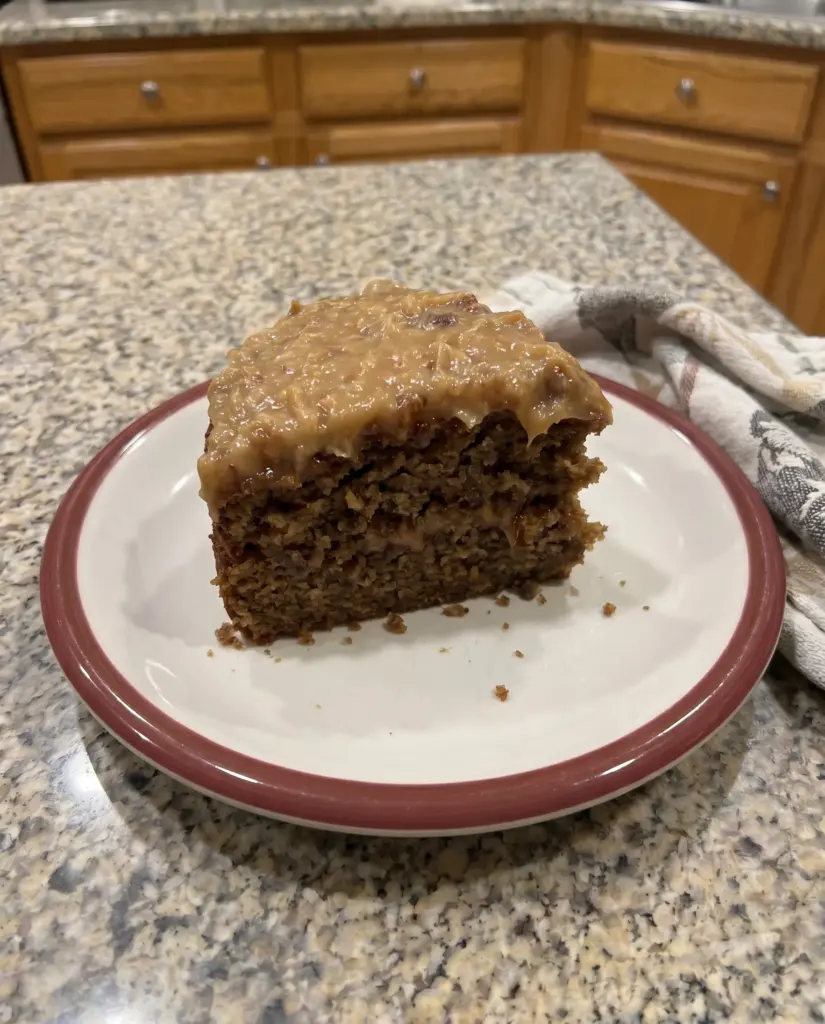
If you’ve never tried an oatmeal cake like this, I hope this little kitchen story inspires you to give it a whirl. And if you’ve been baking it for years, then you already know what I mean when I say this cake is more than just a recipe—it’s a little piece of comfort you can hold onto, one warm, golden slice at a time.
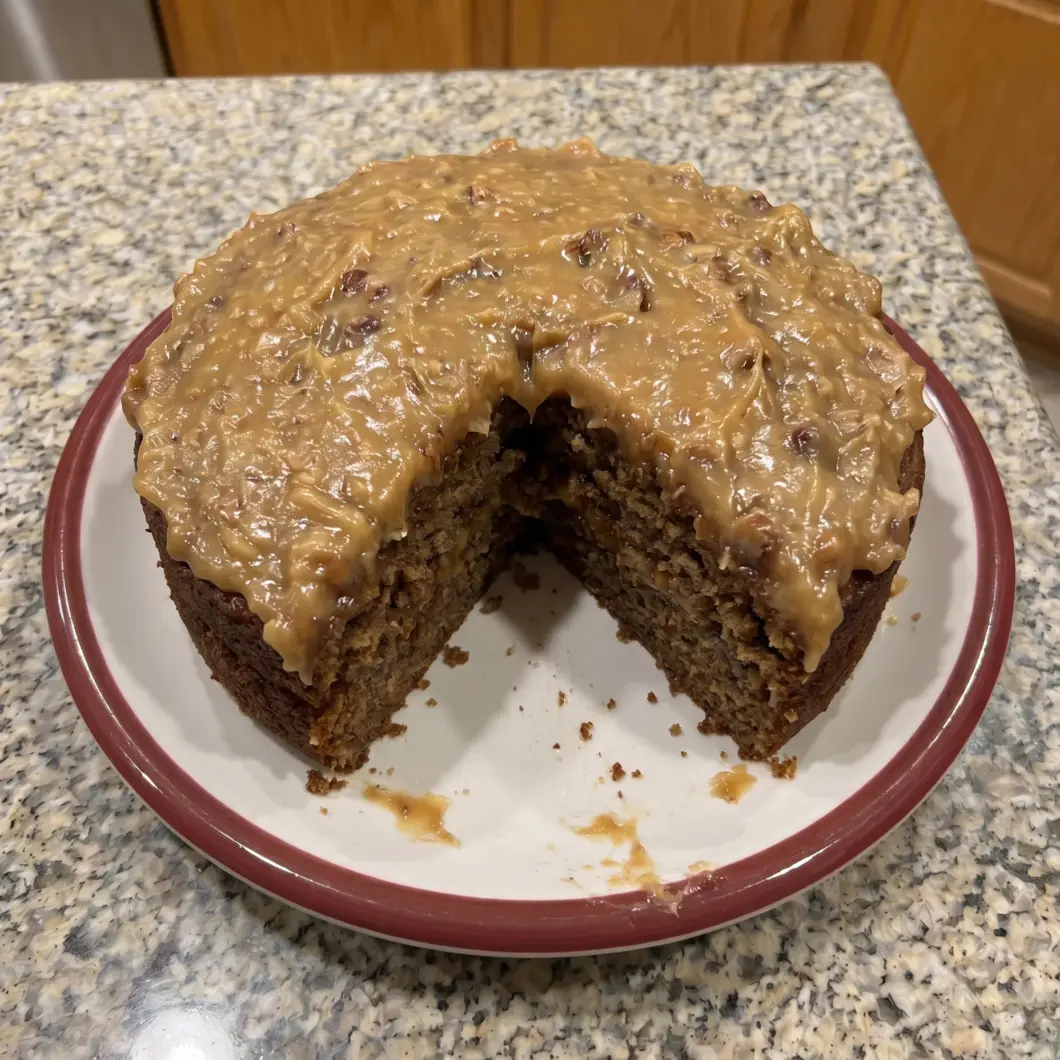
Old-Fashioned Oatmeal Cake
Old-Fashioned Oatmeal Cake is one of those recipes that surprises people every single time. Moist, warmly spiced, and topped with a broiled coconut pecan frosting that caramelizes into something almost candy-like — it’s completely unforgettable.
12
servings25
minutes35
minutes60
minutes390
kcalIngredients
1 1/2 cups 1 1/2 boiling water
1 cup 1 quick oats
1 cup 1 Sugar
1 cup 1 Brown Sugar
1/2 cup 1/2 Butter, Softened
2 2 Eggs
1 batch 1 coconut pecan topping
Directions
- Pour the boiling water over the quick oats in a bowl. Let stand for 20 minutes until absorbed.
- Preheat oven to 350°F (175°C). Grease a 9×13 inch baking dish.
- In a large bowl, cream the butter, sugar, and brown sugar until fluffy. Add the eggs and beat well.
- Stir in the soaked oat mixture until combined.
- Pour the batter into the prepared baking dish.
- Bake for 30-35 minutes until a toothpick inserted in the center comes out clean.
- While the cake is still warm, spread the coconut pecan topping evenly over the surface.
- Broil for 2-3 minutes until the topping is bubbly and golden. Watch carefully.
Notes
- Don’t skip soaking the oats — this is what gives the cake its signature moist texture. The broiled topping is the star of this recipe; watch it carefully so it doesn’t burn. Serve warm or at room temperature.